Fact files

Prehistoric Animal Facts

Meet the real animals behind each adventure. Read the facts here, or download a printable fact sheet for each creature.

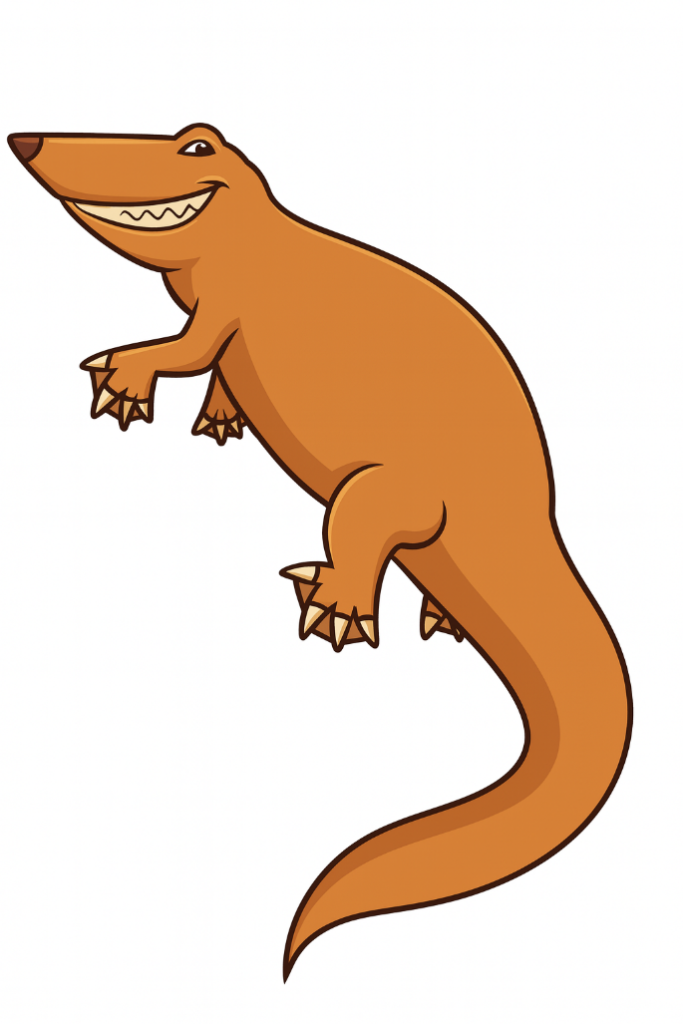
Illustration of Ambulocetus

Ambulocetus

Featured in Book 1: Ambulocetus in Abiquiu Lake

  • A “walking whale”. Its name literally means that, because it could walk on land and swim in the water.
  • It lived a super long time ago. Around 48 million years in the past, when the world was warm and full of strange new animals.
  • It lived in what is now Pakistan. Back then the area was right next to a big ancient ocean called the Tethys Sea.
  • As long as a big alligator. Around 10–12 feet from nose to tail.
  • Strong legs and big feet. It could paddle through the water like an otter but still clomp around on land.
  • No whale tail yet. It swam by wiggling its body up and down, kind of like a giant, chunky otter-whale.
Download fact sheet: Ambulocetus
Illustration of Herrerasaurus
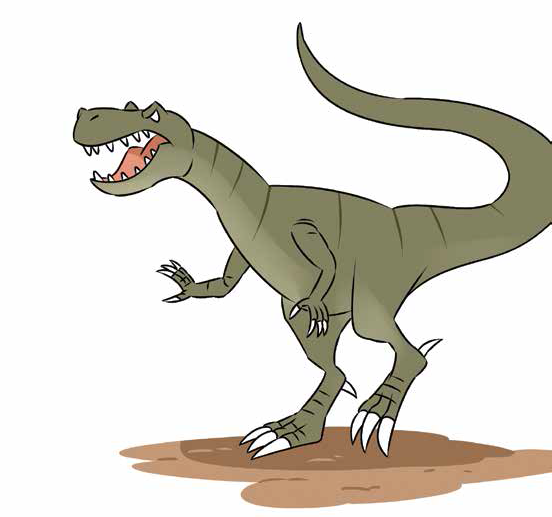
  • One of the first dinosaurs. Herrerasaurus lived over 231 million years ago, making it one of the earliest dinosaurs ever discovered. All known fossils were found in northwestern Argentina, in a place called the Ischigualasto Formation.
  • It was a meat-eater. Herrerasaurus was a carnivore, meaning it hunted and ate other animals — possibly small reptiles and early plant-eaters, and even large predators like Saurosuchus!
  • It walked on two legs. Its strong back legs helped it run quickly, while shorter front arms helped it grab prey. It was about 10–20 feet long (3–6 meters) and weighed around 300–400 pounds — about the size of a big motorcycle.
  • Long tail for balance. A long, muscular tail helped it stay balanced while running and turning fast.
Download fact sheet: Herrerasaurus
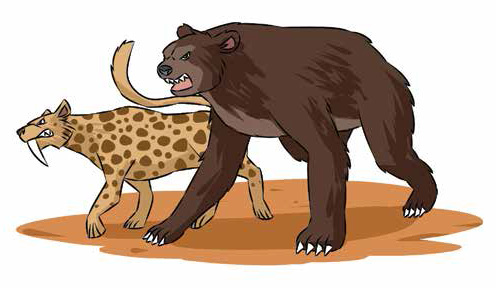
Illustration of Sabre-Toothed Tiger & Short-Faced Bear

Sabre-Toothed Tiger & Short-Faced Bear

Featured in Book 3: Sabertooths and Short-Faces in San Bernardino National Forest

  • It wasn’t actually a tiger. Even though people call it a “Sabre-Toothed Tiger,” it was its own kind of big cat.
  • Giant banana-sized teeth. Its famous fangs could grow longer than a crayon — perfect for taking down big prey.
  • Super strong. Smilodon had a short, powerful body — more like a furry wrestler than a speedy runner.
  • Mammoth neighbors. These cats roamed North and South America during the Ice Age, sharing the world with mammoths, giant sloths and other giant animals.
  • One of the biggest bears ever. Standing on its back legs, the short-faced bear could reach as tall as a two-story house.
  • Super long legs. Its legs were so long that scientists think it could run faster than most other bears.
  • A powerful Ice Age hunter. It lived at the same time as mammoths and giant sloths, and probably scared almost every animal around.
  • It lived all over North America. From Alaska to Mexico, this giant bear roamed huge open spaces during the Ice Age.
Download fact sheet: Sabre-Toothed Tiger & Short-Faced Bear
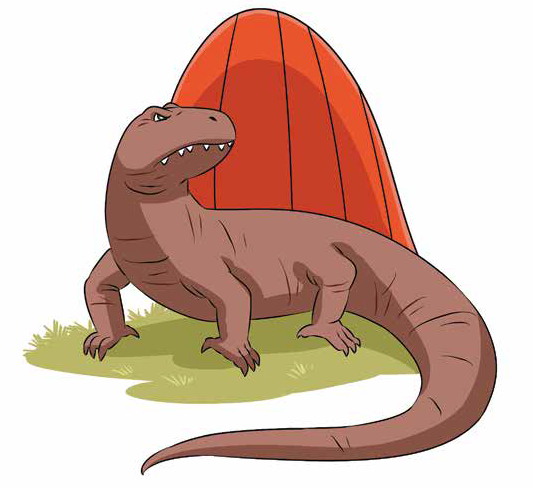
Illustration of Dimetrodon
  • It wasn’t a dinosaur at all. Dimetrodon belonged to a different group of ancient animals.
  • A sail like a solar panel. Its huge sail may have helped it warm up in the morning or cool down in the heat. Every Dimetrodon’s sail was shaped a little differently, like how everyone’s faces are different.
  • Sharp, uneven teeth. Its name means “two-measured tooth,” because it had different kinds of teeth — perfect for chomping meat.
  • Longer than a grown-up human. Some Dimetrodons stretched over 10 feet long — that’s longer than a couch.
  • Millions of years before dinosaurs. Dimetrodon roamed the Earth about 290 million years ago, long before T. rex or Triceratops appeared.
Download fact sheet: Dimetrodon
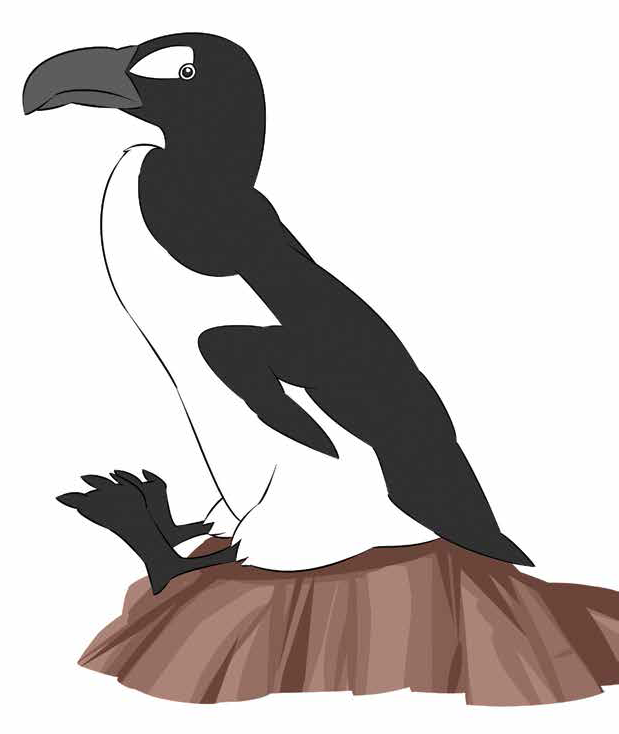
Illustration of Great Auk
  • It looked a bit like a penguin. The Great Auk couldn’t fly and had a black-and-white body, which made it look penguin-like — even though it lived far from Antarctica.
  • An amazing swimmer. Its small wings worked like flippers, helping it zoom through the water to catch fish.
  • It lived in the cold North Atlantic. Great Auks made their homes on rocky islands near places like Canada, Iceland and Greenland.
  • Just one big egg. Each egg was large, colorful and covered in unique squiggly patterns — no two eggs looked the same.
  • Pretty tall for a bird. A Great Auk could stand almost 3 feet tall, making it one of the biggest seabirds of its time.
  • Known for thousands of years. Ancient cultures carved pictures of Great Auks into rocks, showing how important and memorable this bird was.
Download fact sheet: Great Auk